The Model Demonstration Coordination Center (MDCC) was funded from 2005 to 2015 by the U.S. Department of Education, Office of Special Education Programs (OSEP) and operated by SRI International. MDCC synthesized findings across 10 cohorts of model demonstration and technology implementation grantees to identify characteristics of an effective implementation and intervention refinement process—one that moves a practice or tool from early testing to full implementation, sustained implementation, and wider adoption. MDCC findings provide important information about how developers, intervention users, and stakeholders can improve the likelihood of high-quality and sustained implementation. |

About the MDCC The MDCC Worked with 34 grantees in 10 cohorts Facilitated collaborative partnerships with grantees to create opportunities to learn and share ideas, tools, and resources Worked with grantees in some cohorts to establish consistent design elements across projects to deepen the evidence base for the interventions Synthesized findings across projects and cohorts to identify factors facilitating or hindering implementation Identified successful strategies for implementation success Identified key issues in bridging the chasm that can exist between identifying evidence-based practices and achieving their widespread use. |
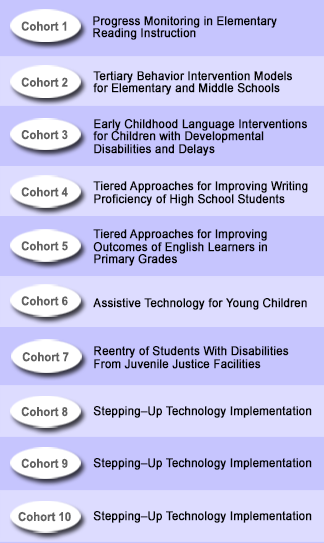
MDCC Cohorts From 2005 to 2014 OSEP funded seven cohorts of model demonstration projects, each focused on a single new and promising practice, procedure, or program that is deemed to have high potential for improving child outcomes. From 2012 to 2014, OSEP also funded three cohorts of Stepping Up technology implementation projects which implement evidence-based technology tools and develop and disseminate products that are intended to help schools and early intervention programs effectively implement the tools. Information about each of these cohorts can be found at the links below.
|
The Model Demonstration Coordination Center has been funded with Federal funds from the U.S. Department of Education, Office of Special Education Programs, under contract number ED-CFO-10-A-0133. The content of this publication does not necessarily reflect the views or policies of the U.S. Department of Education nor does mention of trade names, commercial products, or organizations imply endorsement by the U.S. government. |
|
 |
|